How to Stay Warm During a Winter Power Outage
Disclosure: This page contains affiliate links. If you buy through them we may earn a commission at no extra cost to you. As an Amazon Associate I earn from qualifying purchases. Details.
The urge to "make heat" is what gets people hurt in outages. CDC reports that more than 400 Americans die each year from unintentional carbon monoxide poisoning not linked to fires. The safest strategy is to keep the heat you have and heat your body, not the house.
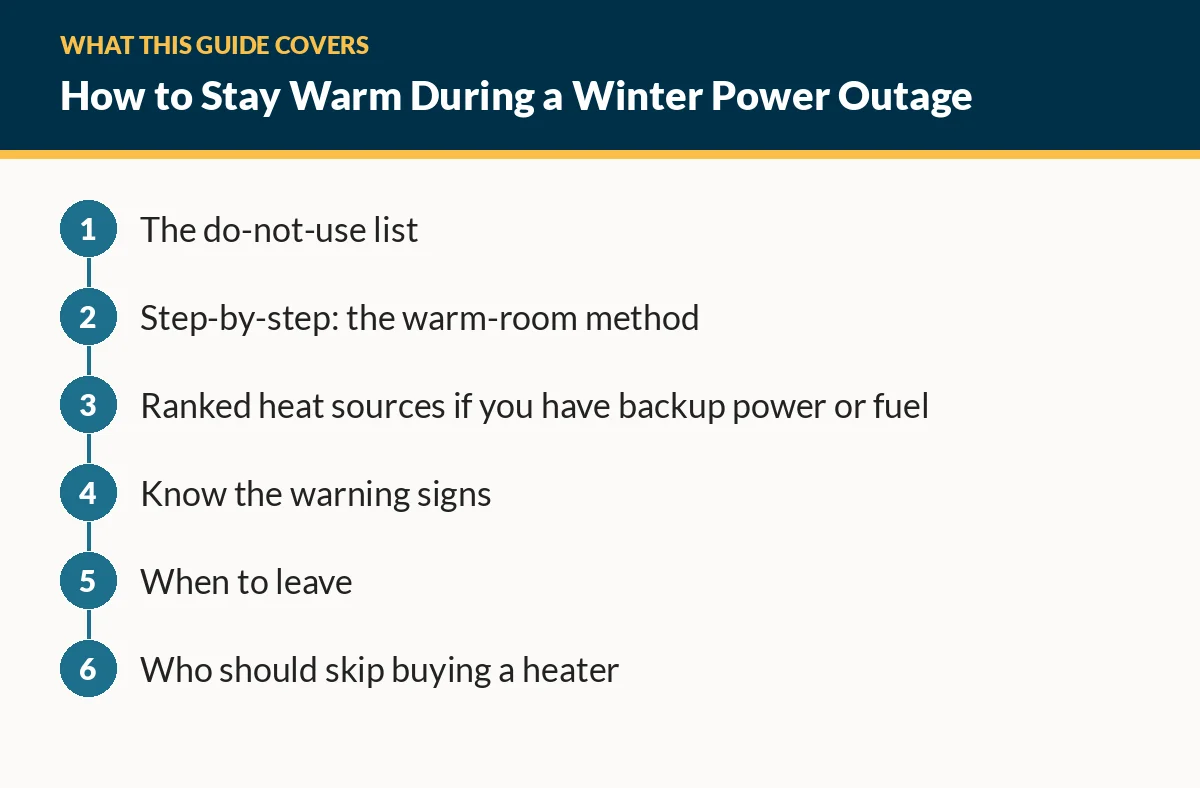
The do-not-use list
- A gas oven or range (CDC).
- A portable generator anywhere inside the home or garage, even with doors open. CDC: outdoors only, more than 20 feet from windows, doors, and vents.
- Charcoal or gas grills, camp stoves, or outdoor patio heaters.
- A car running in an attached garage.
- Candles as a heat source (fire risk, almost no heat).
Step-by-step: the warm-room method
- Pick one room before it gets cold: small, on the side of the house away from the wind, with few windows. A bedroom or interior den works.
- Close it off. Shut the door and roll a towel against the gap. Close blinds and curtains; hang a blanket over windows at night.
- Bring everyone in, including pets. Body heat adds up in a small closed room.
- Layer before you are cold. Base layer, insulating layer (fleece or wool), hat, and warm socks. Covering your head, hands, and feet matters most.
- Insulate from the floor. Sleep on a mattress, sleeping pads, or folded blankets, not directly on a cold floor.
- Eat and drink. Your body makes heat from food. Warm drinks help comfort, but avoid alcohol, which increases heat loss.
- Use sun. Open south-facing curtains during sunny daylight hours and close them at sunset.
- Keep heat in elsewhere. Close doors to unused rooms. Do not open the fridge or freezer.
Ranked heat sources if you have backup power or fuel
| Option | Safety | Notes |
|---|---|---|
| Warm clothing and sleeping bags | Safest | No power needed. Rated sleeping bags are the best value per degree of warmth. |
| Electric blanket or heated throw on a power station | Very safe | Low wattage (often tens of watts), so a mid-size station can run one for hours. Check the label. |
| Hand and body warmers (air-activated) | Safe when used as directed | Follow the package directions, avoid direct skin contact for long periods. |
| Wood stove or fireplace | Safe if vented and maintained | Chimney checked yearly per CDC. Fireplaces lose much of their heat up the chimney. |
| Indoor-rated propane heater | Use with care | Only models labeled for indoor use, per manual, with ventilation and a CO alarm. |
| Electric space heater on a power station | Short bursts only | A 1,500 W heater drains batteries fast. Use the calculator. |
Search cold-rated sleeping bags → Amazon Search battery CO alarms → Amazon
Know the warning signs
Carbon monoxide poisoning (CDC): headache, dizziness, weakness, upset stomach, vomiting, chest pain, confusion; often described as "flu-like." People who are asleep can die before they feel symptoms. If a CO alarm sounds or anyone has symptoms, get everyone into fresh air and call 911.
Hypothermia and frostbite: The National Weather Service notes that hypothermia occurs when the body loses heat faster than it can produce it, and that uncovered skin, hands, and feet are most prone to frostbite. Commonly cited warning signs include intense shivering, confusion, slurred speech, unusual drowsiness, and numb, pale, or waxy skin. Older adults and babies are most at risk. If you see these signs, warm the person gradually and get medical help.
When to leave
If your home falls below a temperature you can safely manage, especially with infants, older adults, or someone with a medical condition, go to a warming center, a friend's home, or a hotel. Your local emergency management office or 211 can tell you where warming centers are open.
Who should skip buying a heater
- If you have no CO alarm, buy that first. A fuel-burning heater without one is a gamble.
- If your outages are short (a few hours), blankets and a closed room are enough.
- If you plan to run a space heater from a battery, you will be disappointed; spend on a heated blanket and sleeping bags instead.
FAQ
Is it safe to use a gas oven or stove for heat?
No. CDC says never heat your house with a gas oven, and do not burn anything in a stove or fireplace that is not vented.
Can I use a propane heater indoors?
Only heaters specifically designed and labeled for indoor use, used exactly per the manufacturer's instructions, with a working CO alarm and ventilation. CDC warns against using portable flameless chemical heaters indoors, and camp stoves and outdoor heaters must never be used inside.
How cold can a house get without heat?
It depends on insulation and outdoor temperature. A well-insulated home may lose only a few degrees overnight; a drafty one can drop fast. That is why concentrating people in one small, closed room works so well.
Related guides
- Winter Power Outage Checklist (Printable)
- Lanterns vs. Flashlights vs. Headlamps for Power Outages
- Portable Power Station Size Calculator (Watt-Hours You Actually Need)